About Autonics Motion Controllers
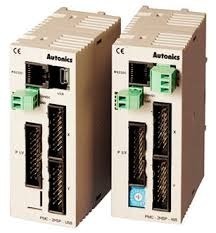
Motion controllers are to generate the pulse signal to control the step motors and drivers and Autonics PMC Series is the controller, which operates and controls step servo system.
- PMC-1HS-232
- PMC-1HS-USB
- PMC-2HS-232
- PMC-2HS-USB
- PMC-2HSN-485
- PMC-2HSN-USB
- PMC-2HSP-485
- PMC-2HSP-USB
- PMC-4B-PCI
- PMC-2TU-232
- PMC-2HSP Series
- PMC-1HS/2HS Series
- PMC-4B-PCI
Advanced Automation with Reliable Motion ControlAutonics Motion Controllers are tailored for precise and efficient operations in automated systems. With a sturdy plastic construction and reliable voltage input of 220V, these controllers function smoothly even in environments where temperatures range from -10 to 40C. Designed for roles such as manufacturing, exporting, or retail, the controllers ensure optimal motion performance for a wide scope of industries.
Flexible Application across IndustriesThese motion controllers serve a broad spectrum of users, including dealers, distributors, and service providers. Their adaptable power range (10-100W) makes them suitable for diverse automation tasks, delivering consistent and accurate control. The white plastic casing not only adds a modern touch but also ensures safety and endurance in demanding settings.
FAQ's of Autonics Motion Controllers:
Q: How do Autonics Motion Controllers enhance industrial process efficiency?
A: Autonics Motion Controllers automate and streamline motion sequences in various machinery, resulting in increased process accuracy, reduced manual errors, and improved operational speed. Their programmable functions help optimize workflows for greater overall productivity.
Q: What types of applications can these controllers be used for?
A: These controllers are ideal for applications in manufacturing, packaging, conveyor systems, and automated assembly lines-where precise motion coordination is essential. Their broad voltage and power range accommodate numerous machinery types.
Q: When should I consider installing an Autonics Motion Controller?
A: You should consider installation when automation reliability, temperature resistance (-10 to 40C), and flexible power compatibility (10-100W) are project requirements. Early integration in system design maximizes efficiency and functional adaptability.
Q: Where can these controllers be installed?
A: Their robust construction allows installation in industrial settings that maintain ambient temperatures within -10 to 40C. They can be mounted on control panels, machinery, or operational stations where motion control is necessary.
Q: What is the process for connecting and configuring the controller?
A: Begin by securely mounting the controller and ensuring a stable 220V power connection. Next, integrate it with system actuators and sensors, then program functions according to required motion operations using provided manuals or interface software.
Q: What are the key benefits of using these motion controllers?
A: Benefits include fast response times, precise motion control, broad operational temperature tolerance, and energy efficiency. Their lightweight design and durable plastic enclosure make them easy to install and maintain, reducing long-term operational costs.







 Send Inquiry


 Send Inquiry


