About Autonics Temperature Controllers
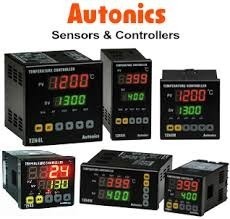
Temperature controllers are used to receive measured temperature and release outputs to maintain desired temperatures.
- TCN4S-22R
- TCN4S-24R
- TCN4S-22R-P
- TCN4S-24R-P
- TCN4M-22R
- TCN4H-22R
- TCN4L-22R
- TCN4M-24R
- TCN4H-24R
- TCN4L-24R
- TX4S-14R
- TX4S-14S
- TX4S-14C
- TX4S-24R
- TX4S-24S
- TX4S-24C
- TX4S-A4R
- TX4S-A4S
- TX4S-A4C
- TX4S-B4R
- TX4S-B4S
- TX4S-B4C
- TM2-22RB
- TM2-22CB
- TM2-42RB
- TM2-42CB
- TM4-N2RB
- TM4-N2SB
- TB42-14R
- TB42-14S
- TB42-14C
- TB42-14N
- TZN4S-14R
- TZN4S-14S
- TZN4S-14C
- T3NI-NXNK2C-N
- T3NI-NXNK4C-N
- T3NI-NXNK8C-N
- T3NI-NXNKAC-N
- T3NI-NXNJ2C-N
- T3NI-NXNJ4C-N
- T3NI-NXNJ5C-N
- T3NI-NXNP0C-N
- T3NI-NXNP1C-N
- T3NI-NXNP2C-N
- T3NI-NXNP4C-N
- T3SI-N4NK8C-N
- T3SI-N4NJ4C-N
- T3SI-N4NP1C-N
- T3SI-N4NP4C-N
- T4MI-N4NK8C-N
- T4MI-N4NKCC-N
- T4MI-N4NJ4C-N
- T4MI-N4NRFC-N
- T4MI-N4NP0C-N
- T4MI-N4NP4C-N
- T4YI-N4NKCC-N
- T4YI-N4NJ5C-N
- T4YI-N4NP0C-N
- T4YI-N4NP4C-N
- T4WI-N4NKCC-N
- T4WI-N4NJ5C-N
- T4WI-N4NP0C-N
- T4WI-N4NP4C-N
- T3HI-N4NKAC-N
- T3HI-N4NJ4C-N
- T3HI-N4NP0C-N
- T3HI-N4NP4C-N
- T4LI-N4NK8C-N
- T4LI-N4NKCC-N
- T4LI-N4NJ4C-N
- T4LI-N4NRFC-N
- T4LI-N4NP0C-N
- T4LI-N4NP4C-N
- T4WM-N3NKCC
- T4WM-N3NJ5C
- T4WM-N3NP0C
- T4WM-N3NP4C
- TC3YF-11R
- TC3YF-21R
- TC3YF-31R
- TC3YF-14R
- TC3YF-24R
- TC3YF-34R
- TC3YF-11R
- TC3YF-21R
- TC3YF-31R
- TC3YF-14R
- TC3YF-24R
- TC3YF-34R
- TC3YT-B4R3
- TC3YT-B4R16
Precision and Flexibility Built InWith a control accuracy of 0.3% of full scale plus one digit, Autonics Temperature Controllers ensure stable and precise temperature regulation. The versatile input compatibility with thermocouples (K, J, T) and RTD (Pt100) makes these controllers suitable for a broad spectrum of industrial environments, from laboratories to manufacturing plants.
User-Friendly Operation and CustomizationSetting up and operating the controller is straightforward-simply use the front keypad to program process setpoints, alarm limits, and control parameters. The dual LED display offers clear visibility of both process and set values at a glance, streamlining monitoring and adjustment
Robust Design and Easy IntegrationManufactured with high-quality flame-resistant resin and durable internal electronics, these controllers are built for challenging environments. They offer IP65 front-panel protection and are available in various sizes for panel mounting, ensuring quick integration into new or existing control panels.
FAQ's of Autonics Temperature Controllers:
Q: How do I configure the Autonics Temperature Controller for different sensor types?
A: Select the appropriate sensor type (thermocouple K, J, T, or RTD Pt100) via the front keypad during initial setup. The controller's menu allows direct selection, ensuring correct input and optimal measurement range.
Q: What advantages does the dual LED display provide?
A: The dual LED display allows simultaneous viewing of the process value (current temperature) and set value (target temperature), enabling instant assessment and adjustments-streamlining operation and improving safety.
Q: When should I use relay output versus SSR drive or voltage pulse output?
A: Relay output is best for direct switching of heaters and simple systems, while SSR drive or voltage pulse output is recommended for systems requiring faster switching, higher reliability, or solid-state relay compatibility, such as precision heating/cooling.
Q: Where can these controllers be mounted?
A: Autonics Temperature Controllers are designed for panel mounting and are available in 48x48 mm, 72x72 mm, and 96x96 mm sizes, making them suitable for integration into standardized electrical control panels.
Q: What is the process for alarm configuration and monitoring?
A: You can set 1 or 2 configurable alarms using the front keypad. Alarms can be programmed to trigger at preset temperature thresholds, providing audio or visual alerts or activating external devices for process protection.
Q: How does the optional RS485 communication benefit industrial automation?
A: The RS485 (Modbus RTU) option enables networked communication with SCADA systems or PLCs, supporting remote monitoring, data logging, and integration into centralized process control systems, enhancing operational efficiency.







 Send Inquiry


 Send Inquiry


