About Baumer Laser Distance Measuring Sensors
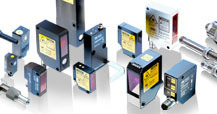
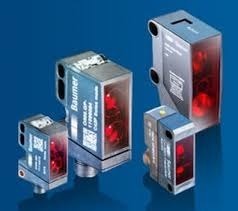
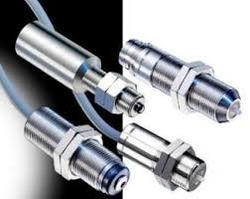
Distance measuring laser sensor OADM 13 New laser sensor for particularly demanding applications.The three new distance measuring laser sensors of the OADM 13 family with laser class 1 solve particularly demanding, so far unresolved tasks. At the same time, they are easy to handle.
- OADM 12
- OBDM 12
- OADM 13
- OADM 20
- OADM 21
- OM 70
- OADM 250 Time-of-Flight
- OADM 260 Time-of-Flight
Hygienic and washdown design
Light-section sensors PosCon
- OXE7.E25T PosCon 3D
- OXH7 PosCon HM
Edge sensors
- ZADM 034P
- ZADM 034I
- ZADM 034I
- ZADM 023
Copy counters SCATEC
- SCATEC-J
- SCATEC-2
- SCATEC-10
- SCATEC-15
Level monitoring and leak detecting sensors
Contrast sensor
Color sensor LOGIPAL
Advanced Precision for Industrial AutomationBaumer Laser Distance Measuring Sensors deliver reliable and highly accurate results for industrial automation needs. With a remarkable 1 mm accuracy and a repeatability of 0.2 mm, these sensors streamline quality assurance and monitoring processes. Their vast measuring range and rapid response enable seamless integration into automated assembly lines, material handling, and process control, helping businesses achieve greater productivity and reduced downtime.
Rugged Design for Demanding EnvironmentsEngineered with a robust aluminum/plastic composite housing, these sensors boast an IP67 protection rating, shielding internal components from dust and water ingress. This rugged design ensures optimal performance in challenging industrial environments, from manufacturing plants to warehouses. The flexible mounting options (through-hole or bracket) further enhance adaptability, allowing swift installation in various setups.
Versatile Connectivity and Output OptionsSupporting analog and digital outputs (0-10 V, 4-20 mA, or selectable RS232/RS485/IO-Link), Baumer distance sensors easily interface with diverse control systems and PLCs. Their power efficiency (< 2 W) and a wide operating voltage (10-30 V DC) make them suitable for a broad array of industrial applications, ensuring reliability and flexibility for integrators, OEMs, and end users.
FAQ's of Baumer Laser Distance Measuring Sensors:
Q: How are Baumer Laser Distance Measuring Sensors typically installed in industrial settings?
A: Baumer Laser Distance Measuring Sensors offer flexible installation options, including through-hole and bracket mounting. This enables quick and secure attachment to various machinery or structural components, supporting optimal positioning for accurate distance measurement applications in industrial environments.
Q: What are the key benefits of using this sensor in industrial processes?
A: The sensor provides high measurement accuracy (1 mm) and repeatability (0.2 mm) at fast response times (< 2 ms), which ensures real-time monitoring and control. Its robust IP67 construction, wide temperature range, and advanced temperature compensation enhance reliability and performance in demanding industrial atmospheres.
Q: When is it appropriate to use this sensor in a manufacturing application?
A: These sensors are ideal when precise, reliable, and non-contact distance measurement is required-for example, during automated quality checks, position monitoring, or material handling. Their high accuracy and robust design suit environments involving rapid movements or fluctuating temperatures.
Q: Where is the Baumer Laser Distance Measuring Sensor most commonly deployed?
A: The sensor is widely used in industrial facilities across India, particularly in sectors such as automation, logistics, manufacturing, and process control. It is favored for environments where dust, moisture, or temperature fluctuations may affect measurement reliability.
Q: What makes the output interface of this sensor versatile for different industrial systems?
A: With selectable analog (0-10 V/4-20 mA) and digital (RS232, RS485, IO-Link) interfaces, the sensor adapts to various control platforms and PLCs. This versatility ensures smooth integration into both new and existing industrial automation infrastructures.
Q: How does the active temperature compensation feature improve measurement accuracy?
A: Active temperature compensation continuously adjusts measurements in response to environmental temperature changes. This results in consistent high-accuracy readings (down to 1 mm), even in manufacturing settings with variable thermal conditions.







 Send Inquiry


 Send Inquiry


