About MELSEC-Q Series
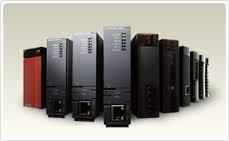
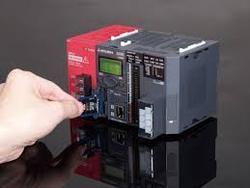
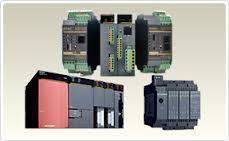
The MELSEC-Q Series sets the standard for speed, precision, and performance. Multi-disciplinary in design, the Q Series offers a broad spectrum of automation capabilities from basic sequence control to process/redundant, motion and PC-based control functions. Flexible and expandable, you can mix and match standard Q Series modules to create a system that addresses the functions you need. Whether it is a small stand-alone machine or entire plants in a variety of industries, this controller line can help you minimze operation cycles, improve performance, and maxiize equipment uptime.
- Q03UDECPU
- Q04UDEHCPU
- Q06UDEHCPU
- Q10UDEHCPU
- Q13UDEHCPU
- Q20UDEHCPU
- Q26UDEHCPU
- Q50UDEHCPU
- Q100UDEHCPU
- Q03UDVCPU
- Q04UDVCPU
- Q06UDVCPU
- Q13UDVCPU
- Q26UDVCPU
- Q10WCPU-W1-E
- Q10WCPU-W1-CFE
- Q12DCCPU-V
- Q02PHCPU
- Q06PHCPU
- Q12PHCPU
- Q25PHCPU
- Q12PRHCPU
- Q25PRHCPU
- Q12PRHCPU
- Q25PRHCPU
- QC10TR
- QC30TR
- Q38RB
- Q68RB
- Q65WRB
- Q64RPN
- QJ71LP21-25
- QJ71LP21S-25
- QJ71LP21GE
- QJ71BR11
- QJ72LP25-25
- QJ72LP25GE
- QJ72BR15
- QJ71E71-B2
- QJ71E71-B5
- QJ71E71-100
- Q81BD-J71LP21-25
- Q80BD-J71LP21G
- Q80BD-J71BR11
- QJ71GP21-SX
- QJ71GP21S-SX
- Q35DB
- Q38DB
- Q312DB
- Q33B
- Q35B
- Q38B
- Q38RB
- Q312B
- Q52B
- Q55B
- Q63B
- Q65B
- Q68B
- Q68RB
- Q612B
- Q65WRB
- QC05B
- QC06B
- QC12B
- QC30B
- QC50B
- QC100B
- Q61P
- Q61P-D
- Q62P
- Q63P
- Q64PN
- Q63RP
- Q64RP
- QX10
- QX28
- QX40
- QX40-S1
- QX40H
- QX41
- QX41-S1
- QX41-S2
- QX42
- QX42-S1
- QX70
- QX70H
- QX71
- QX72
- QX80
- QX80H
- QX81
- QX81-S2
- QX82
- QX82-S1
- QX90H
- QH42P
- QX41Y41P (*1)
- QX48Y57
- QY10
- QY18A
- QY22
- QY40P
- QY41P
- QY42P
- QY50
- QY68A
- QY70
- QY71
- QY80
- QY81P
- QY82P
- Q64AD
- Q68ADV
- Q68ADI
- Q64ADH
- Q68AD-G
- Q64AD-GH
- Q66AD-DG
- Q62AD-DGH
- Q64AD2DA
- Q62DAN
- Q64DAN
- Q68DAVN
- Q68DAIN
- Q64DAH
- Q62DA-FG
- Q66DA-G
- ME1AD8HAI-Q
- Q61LD
- Q68TD-G-H01
- Q68TD-G-H02
- Q64TDV-GH
- Q64RD
- Q64RD-G
- Q68RD3-G
- Q64TCTTN
- Q64TCRTN
- Q64TCTTBWN
- Q64TCRTBWN
- QD62-H01
- QD62-H02
- QD62
- QD62E
- QD62D
- QD63P6
- QD65PD2
- QD75P1N (*1)
- QD75D1N
- QD75P2N (*1)
- QD75D2N
- QD75P4N (*1)
- QD75D4N
- QD72P3C3
- QD73A1
- QD70P4
- QD70P8
- EQ-V680D1
- EQ-V680D2
- QJ71E71-100
- QJ71E71-B5
- QJ71E71-B2
- NZ2EHF-T8
- QD81DL96
- 10BASE-T
- 100BASE-TX
- QD81DL96
- QD81MEM-512MBC
- QD81MEM-1GBC
- QD81MEM-2GBC
- QD81MEM-4GBC
- QD81MEM-8GBC
- QJ71MES96
- QJ71MES96IT
- QJ71C24N
- QJ71C24N-R2
- QJ71C24N-R4
- QD51
- QD51-R24
- QE81WH
- QE81WH4W
- QE84WH
- QE83WH4W
- QE82LG
- QE8WH4VT
- Q68CT
- EMU-CT50
- EMU-CT100
- EMU-CT250
- EMU-CT400
- EMU-CT600
- EMU2-CT5
- EMU2-CT5-4W
- EMU2-CB-Q5A
- EMU2-CB-Q5A-4W
- EMU2-CB-Q5B-4W
- EMU2-CB-T1M
- EMU2-CB-T5M
- EMU2-CB-T10M
- EMU2-CB-T1MS
- EMU2-CB-T5MS
Exceptional Expandability and PerformanceThe MELSEC-Q Series stands out for its ability to support up to 64 expansion modules and 4096 I/O points, meeting a broad array of automation requirements. With a high-speed CPU capable of processing basic instructions in just 0.009 milliseconds, users benefit from swift and reliable system responses. Its modular design enables scalable solutions for both medium and large-scale control systems, making it ideal for growing industrial needs.
Comprehensive Connectivity OptionsSupporting a wide spectrum of communication protocols-including CC-Link, Modbus, Ethernet/IP, Profibus, and MELSECNET/H-the MELSEC-Q Series provides seamless integration with various factory and process networks. Multiple ports (Ethernet, RS232, RS485, USB) allow for flexible connection to supervisory systems, HMIs, or other PLCs, enhancing data exchange and remote monitoring across diverse setups.
Reinforced Reliability and SafetyThe MELSEC-Q Series offers optional CPU and power redundancy, reducing downtime risks and increasing operational safety. Battery-backed SRAM and Flash memory ensure secure data storage and stable program execution. Its IP20 standard rating and robust design make it suitable for demanding industrial environments, with higher protection classes available for specialized conditions.
FAQ's of MELSEC-Q Series:
Q: How does the MELSEC-Q Series handle expansion for large-scale automation projects?
A: The MELSEC-Q Series is capable of expanding up to 64 modules, supporting up to 4096 I/O points. This modular expansion allows users to tailor their PLC configuration to accommodate the precise needs of their automation project, whether scaling up outputs or integrating additional process controls.
Q: What are the benefits of the MELSEC-Q Series' high instruction processing speed?
A: With a basic instruction processing time of 0.009 ms, the MELSEC-Q Series ensures rapid response and precise control for time-critical applications. This speed enables high system throughput, lowers latency in industrial processes, and allows for more complex logic handling without compromising on performance.
Q: Where can the MELSEC-Q Series be deployed most effectively?
A: The MELSEC-Q Series is well-suited for use in factory automation, process control, and machine control applications. It is designed for environments requiring robust, scalable automation, such as manufacturing plants, assembly lines, material handling systems, and other industrial facilities across India and globally.
Q: What programming tools are compatible with the MELSEC-Q Series PLCs?
A: Programming the MELSEC-Q Series can be done using GX Developer, GX Works2, or GX Works3 software. These industry-standard development tools offer user-friendly environments for creating, managing, and troubleshooting PLC programs, ensuring both flexibility and ease of use for engineers and technicians.
Q: How does redundancy improve system reliability in the MELSEC-Q Series?
A: The MELSEC-Q Series supports optional CPU and power redundancy. This means that if the primary unit or power supply fails, a backup system takes over, preventing operational downtime and enhancing system reliability in mission-critical industrial applications.
Q: When should you consider the built-in memory features offered by the MELSEC-Q Series?
A: Users should utilize the battery-backed SRAM and Flash memory to safeguard critical programs and data, especially in systems where consistent operation is essential and data loss could result in significant downtime or process interruption. Battery-backed memory ensures program retention during unexpected power outages.







 Send Inquiry


 Send Inquiry


