About PID Temperature Controlle
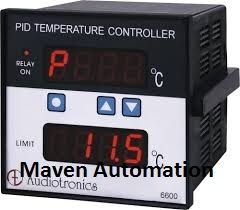
By utilizing modern machines and latest equipment, we are engaged in manufacturing, supplying, trading, importing and exporting an exclusive range of PID Temperature Controller in Ahmedabad, Gujarat, India. We make use of quality raw material and advanced technology to manufacture this controller. Clients can avail this controller at a competitive price.Versatile Sensor CompatibilityThis PID Temperature Controller accepts both Thermocouple and RTD PT100 input sensors, allowing broad compatibility with various temperature measurement requirements. The system is engineered to handle a setpoint range of 0 to 400C (depending on the model), making it highly adaptable for industrial and laboratory processes that demand accuracy and reliability.
Reliable and Accurate Output ControlOffering multiple output types-Relay/SPDT, SSR, and 4-20mA-the controller ensures seamless integration into your existing temperature regulation systems. The device provides a maximum output current of 10A and features a highly accurate 0.5% full-scale performance, suitable for critical process control scenarios.
Easy Installation and DisplayDesigned as a panel mount, this controller fits securely within equipment panels, saving space and simplifying setup. The digital 7-segment LED display provides a clear, immediate readout with 1C resolution, ensuring operators can monitor temperature status at a glance. Lightweight yet robust, its black painted metal base and ABS housing accentuate durability.
Configurable Safety AlarmsThe controller includes configurable process and deviation alarms that enhance safety by alerting users to out-of-spec conditions. These alarms can be tailored to specific thresholds, allowing for customized process protection and timely response to potential issues.
Energy Efficient and Durable DesignWith a power consumption of less than 5W and an operating temperature range from 0C to 50C, this controller balances energy efficiency with dependable operation. IP20-rated protection, IS Certification, and a painted metal base help ensure long-term service under rigorous industrial conditions.
FAQ's of PID Temperature Controlle:
Q: How do I install the PID Temperature Controller in a control panel?
A: To mount the controller, cut an opening in your panel matching the device's dimensions (48 x 48 mm face, 110 mm depth). Secure the unit using the provided panel mounting brackets, then connect the sensor input terminals, output relay, and power supply to the corresponding terminals as indicated in the installation manual.
Q: What types of sensors can be connected to this PID controller?
A: This controller supports both Thermocouple and RTD PT100 input sensors, enabling flexibility for temperature measurement in diverse industrial and laboratory applications. Be sure to configure the unit for the sensor type you are using during setup.
Q: When should the configurable alarms be used?
A: Process and deviation alarms should be set whenever you want to be alerted of temperatures that deviate from predefined limits. These alarms are particularly beneficial for critical operations that require immediate intervention to avoid system malfunctions or product quality issues.
Q: Where can this temperature controller be applied?
A: It is widely suitable for both industrial and laboratory environments, including manufacturing plants, process instrumentation setups, and research laboratories where accurate temperature monitoring and control are essential.
Q: What benefits does the auto-tuning feature provide?
A: The auto-tuning function automatically adjusts the controller's PID parameters to match the system's dynamics, optimizing temperature control for different applications and reducing manual setup time. This ensures more accurate and stable temperature regulation.
Q: How does the controller maintain safety and durability?
A: With features like a durable ABS plastic body, IP20 rating, IS Certification, configurable alarms, and Class II protection, the controller prioritizes operational safety, electrical integrity, and long-term durability, even under demanding industrial conditions.
Q: What is the recommended way to ensure optimal accuracy and performance?
A: To maximize performance, operate the controller within the specified ambient conditions (0C to 50C, 35-85% RH non-condensing), perform regular maintenance checks on wiring and connections, and utilize the auto-tuning function to adjust for process changes or different sensor inputs.







 Send Inquiry


 Send Inquiry


