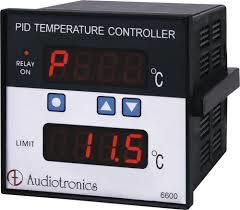
About Pid Temperature Controller
TCN Series is economical temperature controllers having dual preset indicator display to increase user convenience. The series realizes ideal temperature controlling with newly developed PID control algorithm and 100ms high speed sampling; in addition, the series allows users to take advantage of economical controlling with SSRP and relay outputs. The TCN Series is also available in low voltage models for wider user options.
Features
Realizes ideal temp. controlling with newly developed PID control algorithm and 100ms high speed sampling
Built-in relay output or SSR drive output selectable : Enables to phase control and cycle controlwith SSR drive output (SSRP function)
Dramatically increased visibility using wide display part
Enhanced convenience of wiring and maintenance by connector plug type (TCN4S- -P)
Mounting space saving with compact design : Approx. 38% reduced size compared with existing model (depth-based)
Applications
Temperature Controlling in Tire production catapulting lines
Specifications:
| Manufacturer |
Autonics |
| Display |
7-Segment LED Display |
| Sampling Time |
100ms |
| Power Supply |
24 VAC 50/60Hz,24-48 VDC |
| Power Consumption |
Max.7 VAC (24 VAC 50/60 Hz),6W(24-48VDC) |
| Alarm Type |
AL1,AL2 Relay Output:250VAC |
Accurate and Versatile ControlEngineered for precision, this PID temperature controller measures and manages process temperatures with 0.5% accuracy of the full scale. Its wide compatibility with thermocouples and RTD sensors accommodates varied application needs, making it suitable for both industrial automation and laboratory environments.
Flexible Mounting and InterfacesDesigned for panel mounting by default and adaptable to DIN rail installation, the controller fits seamlessly into control cabinets or enclosures. Options for relay, SSR, or 4-20mA control outputs ensure easy integration with diverse heating and automation systems.
User-Friendly Display and OperationThe digital dual-LED panel assures clear visibility of temperature and setpoint values. With features like auto-tuning, manual/auto switch, and up to two configurable alarms, users can operate, monitor, and maintain desired conditions effortlessly.
FAQ's of Pid Temperature Controller:
Q: How do I select the appropriate sensor input for my application?
A: Choose between Thermocouple (K, J, T, E) or RTD (Pt100) inputs based on your temperature range and process requirements. Thermocouples cover a broader range up to 1800C, whereas Pt100 offers higher accuracy in lower temperatures. Ensure sensor compatibility for reliable performance.
Q: What is the process for setting up the controller on a panel or DIN rail?
A: Install the device directly into a standard control panel cutout for panel mounting. For DIN rail mounting, use the provided adapter. Secure all connections to terminal blocks as indicated in the user manual, then power the unit with 100-240VAC.
Q: Where should the PID temperature controller be used for optimal performance?
A: Deploy this controller in environments requiring precise temperature control, such as industrial ovens, heaters, or automated machinery. Ensure ambient temperature remains between 0C and 50C, with relative humidity of 20-90% (non-condensing) for optimal operation.
Q: What benefits does the auto-tuning feature offer?
A: The auto-tuning function automatically adjusts PID parameters to match your system dynamics, reducing setup time and enhancing temperature stability. This leads to improved control accuracy and process efficiency without manual trial-and-error.
Q: How can I configure and use the alarm output features?
A: The controller supports one or two programmable alarms. Configure alarm thresholds and types using the menu settings. When the process temperature exceeds or falls below setpoints, the alarms trigger outputs for safety interventions or process alerts.
Q: When is it advisable to use the 4-20mA control output option?
A: Choose the 4-20mA output when integrating the controller with industrial automation systems, PLCs, or devices requiring analog input. This current output ensures noise immunity and reliable long-distance transmission in complex installations.
Q: What protection and compliance features does the device offer?
A: The controller provides IP65-rated front panel protection, IEC 61010-1 compliance, and a Class II safety rating. Its robust enclosure shields internal components from dust, water splashes, and electrical hazards, enhancing durability in industrial environments.







 Send Inquiry


 Send Inquiry


